7 Secluded Greek Bays Only Reachable by Boat
By Ryan Brown published on 23 April 2026
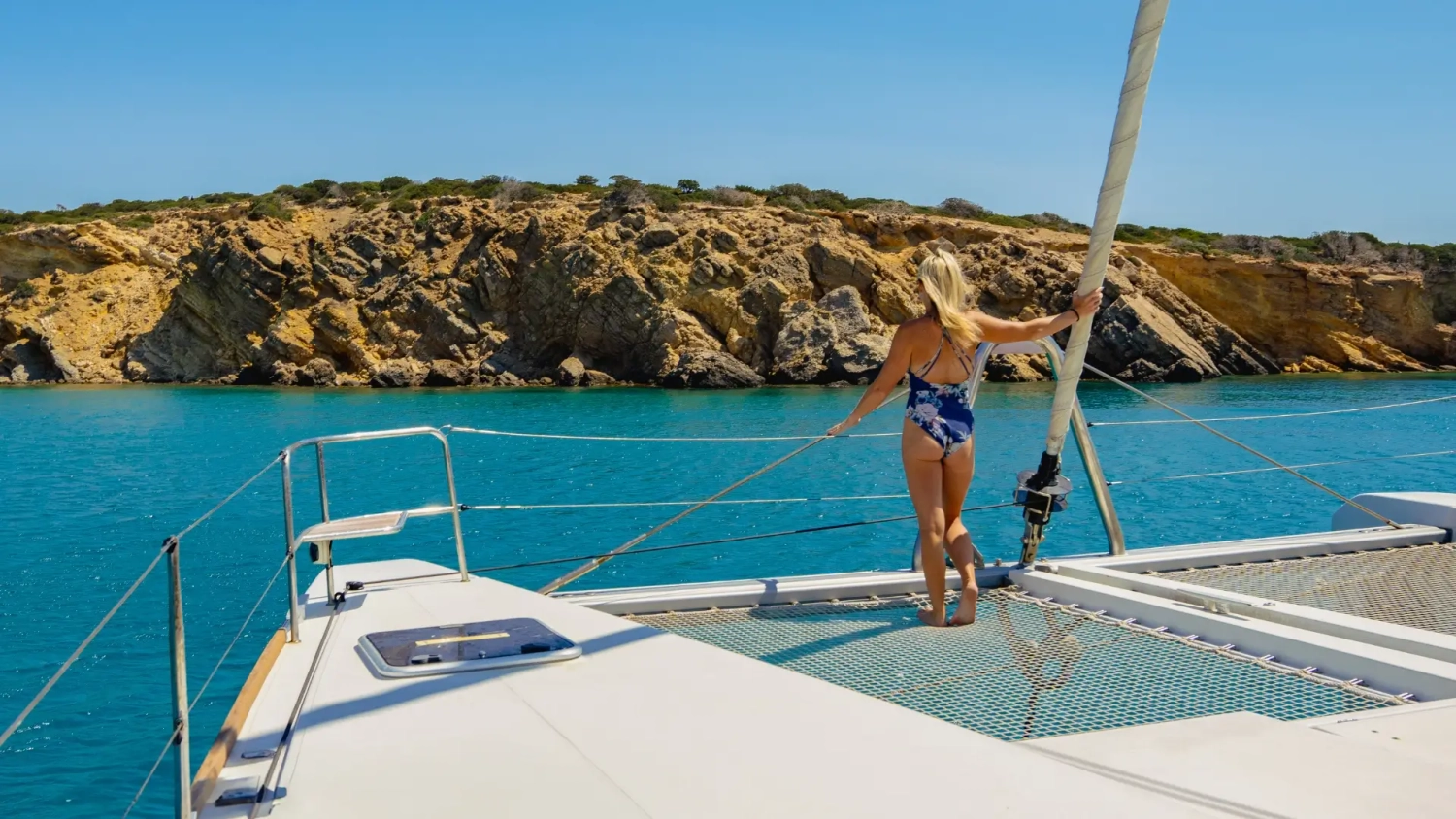
There is a version of Greece that most visitors never find. It exists beyond the postcard ports, the sunlounger beaches, and the tourist boats circling the same handful of coves. To reach it, you need water under your hull. And that doesn't mean by ferry or cruise ship.
Greece has over 16,000 kilometres of coastline and more islands than anyone has reliably counted. The consequence of this is that some of its most extraordinary bays remain genuinely unreachable to anyone that isn't sailing the Greek islands — not by design, but simply by geography. Sheer cliffs drop straight into the Aegean. Narrow sea-level entrances open into cathedral-sized lagoons. Freshwater springs feed hidden bays that no road has ever reached.
And we've gathered seven such places — chosen not just for their beauty, but for the variety of seclusion and escape they represent. Whether you're exploring the Ionian Islands, the Cyclades, or the Saronic Gulf, each of these bays is the sort of discovery that makes a sailing holiday feel like it belongs to you.
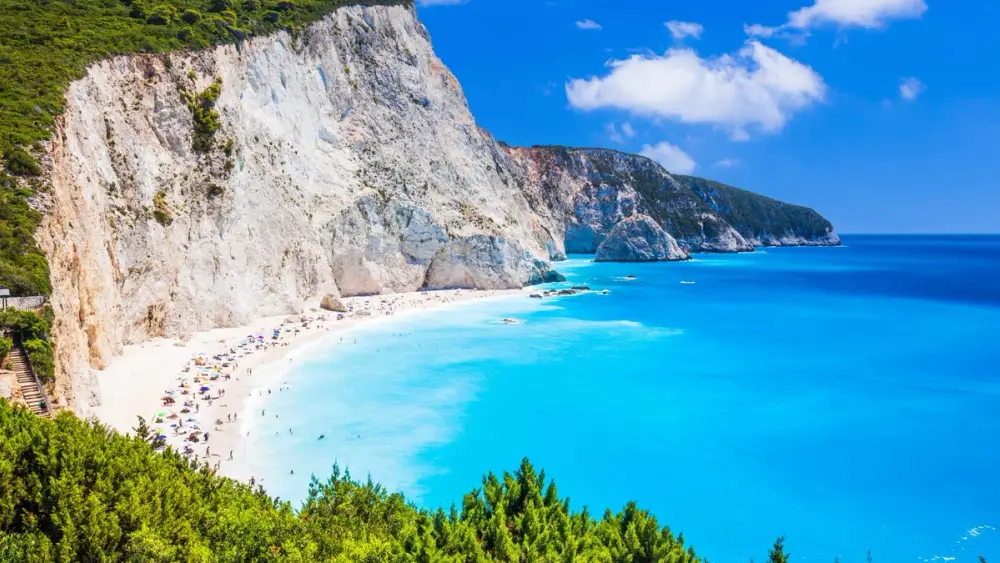
1. Navagio Beach (Shipwreck Bay), Zakynthos — Ionian Sea
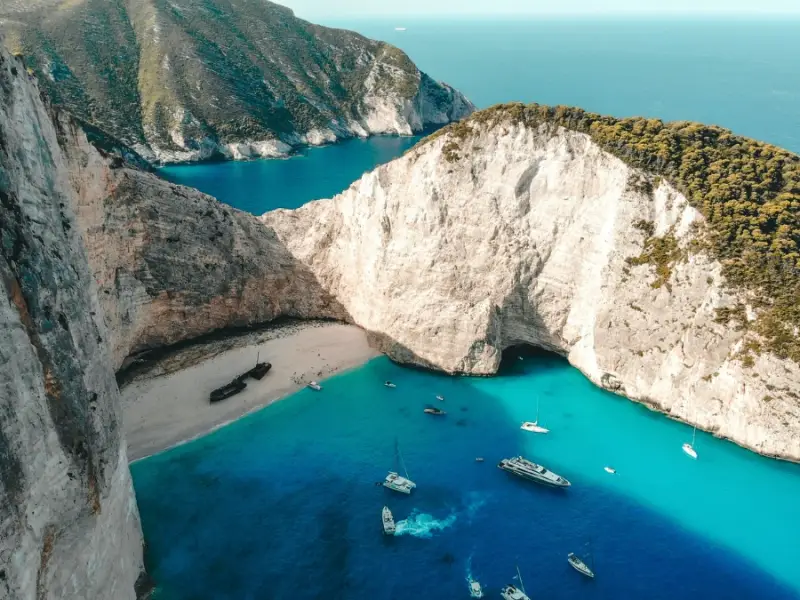
Few places in the Mediterranean are as immediately recognisable as Navagio, and yet the very reason it looks so extraordinary is the reason it remains exclusive: there is no road in, no path down, and no way to stand on that white sand unless you arrive by sea.
The bay is carved into the sheer white limestone cliffs of Zakynthos's northwest coast, and what greets you when you round the headland is a rusting freighter — the MV Panagiotis, which ran aground here in 1980 — sitting in the middle of a crescent beach, flanked by walls of chalk-white rock rising nearly 200 metres. The water in the enclosed bay turns an unusual shade of electric blue, the result of light refracting off of the bright sand and pale cliffs.
Arriving by yacht lets you do something no day-tripper can: drop anchor before the excursion boats arrive and have the beach to yourselves in the early morning, when the light on the cliffs is at its most spectacular.
Best time to visit: June or September, when the light is warm but the summer crowds have thinned.
Sailing region: Ionian Islands
2. Voutoumi Beach, Antipaxos — Corfu Explorer Route
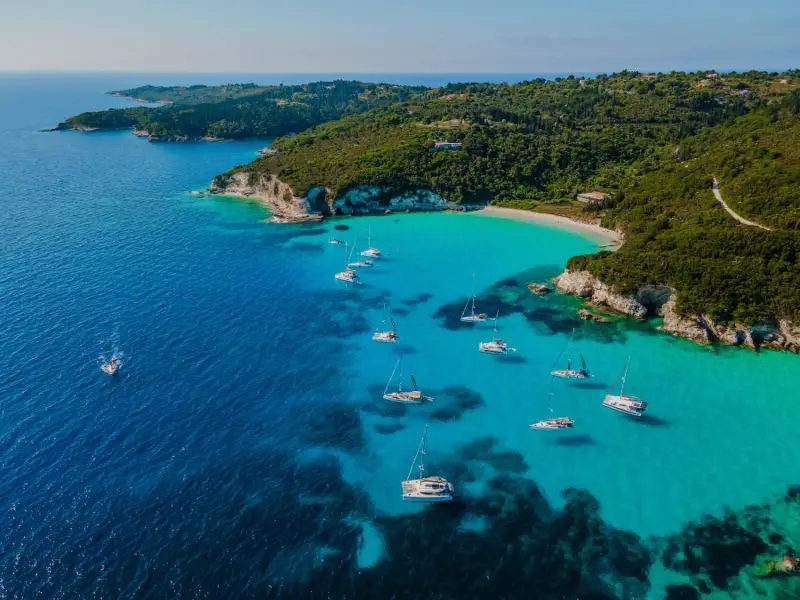
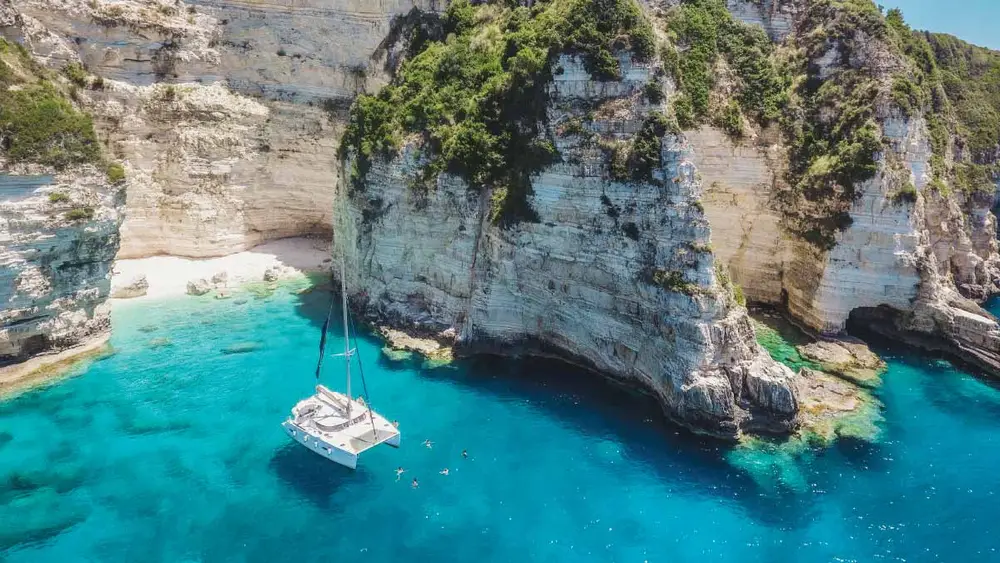
A short sail south of Paxos, the island of Antipaxos is barely five square kilometres and home to fewer than 100 year-round residents. It has no hotels, no supermarket, and no roads worth mentioning — and Voutoumi Beach, on its northeastern shore, is among the finest anchorages in the Ionian.
Lonely Planet has ranked Voutoumi among the ten best beaches in Europe, and the water makes a compelling case. The colour shifts from pale aquamarine in the shallows to a deep, saturated cobalt further out — the result of an unusually white sandy seabed — and the clarity is such that you can see the anchor chain lying on the bottom in several metres of water. Cypress trees reach the shore, which together with the enclosing hillside gives the bay a sheltered, almost tropical character.
The island itself produces wine; two traditional tavernas operate near the beach in summer, and the food is as unhurried as the setting. Visit early or late in the day for the calmest conditions and fewest visitors, as day-trip boats from Paxos begin arriving from mid-morning.
Voutoumi is a natural highlight of our Greece Corfu Explorer route, which explores the southern Ionian — including Paxos, Antipaxos, and the Blue Caves.
Best time to visit: Late May, June, or early September.
Sailing region: Ionian Islands — Corfu Explorer route
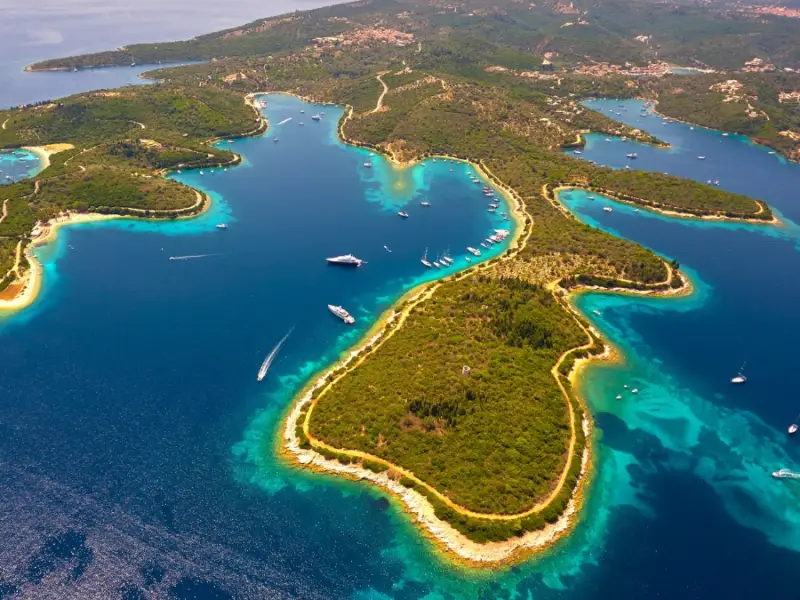
3. Spilia Bay, Meganisi Island — Lefkada Explorer Route
Just off the southern tip of Lefkada, the island of Meganisi is small enough to circumnavigate in a single afternoon and little-known enough that it rarely appears on mainstream itineraries. Spilia Bay, on the island's western coast, is the reason seasoned Ionian sailors tend to keep coming back.
The bay is cave-like in character: dramatic limestone formations on either side create a natural enclosure, and the water inside takes on an extraordinary depth of colour — blue-green in the shallows, darkening to indigo near the cave entrances.
Meganisi itself is worth an evening ashore. The village of Spartochori, perched above the eastern coast, has a small church that is over 300 years old and two or three tavernas where the menu changes daily depending on what the fishing boats have brought in. The island is connected to Lefkada by a short ferry from Nidri, but arriving by yacht — anchoring in the bay with no ferry schedule to keep — is a different proposition entirely.
Our route includes Meganisi as part of a week-long Ionian itinerary that also takes in Lefkada's famous west-coast beaches and the waters around Ithaca and Kefalonia.
Best time to visit: June through September — the bay is protected from most wind directions.
Sailing region: South Ionian Islands — Lefkada Explorer route
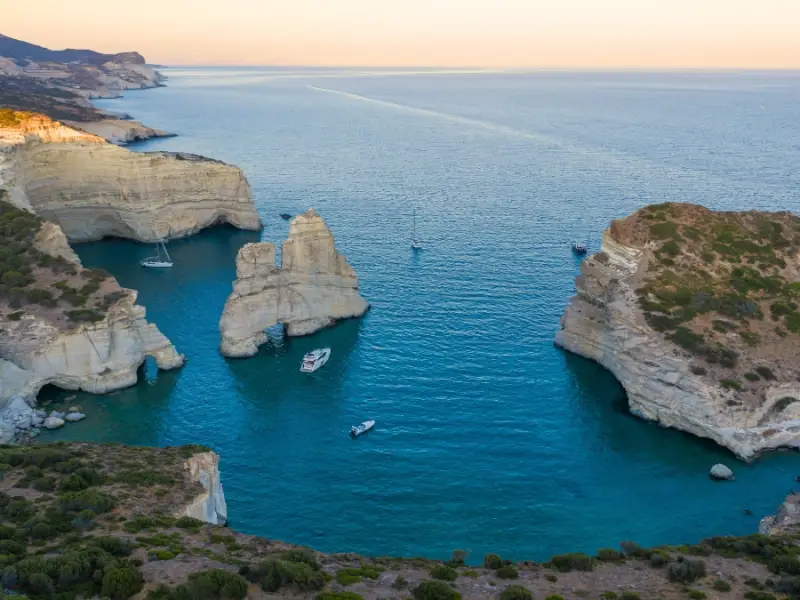
4. Kleftiko Bay, Milos — Cyclades
Milos is already one of Greece's more compelling islands — formed by a volcanic caldera, with a landscape of white pumice cliffs and sea stacks that look as though they've been carved by a sculptor with a theatrical bent. Kleftiko, on the island's southwestern coast, takes this further.
The bay is a complex of sea caves, rock arches, and natural tunnels worn into the white volcanic rock by thousands of years of wave action. The water inside the caves takes on an unreal luminosity — light filters through submerged entrances and lights the interior from below. It is, genuinely, unlike anywhere else in the Aegean.
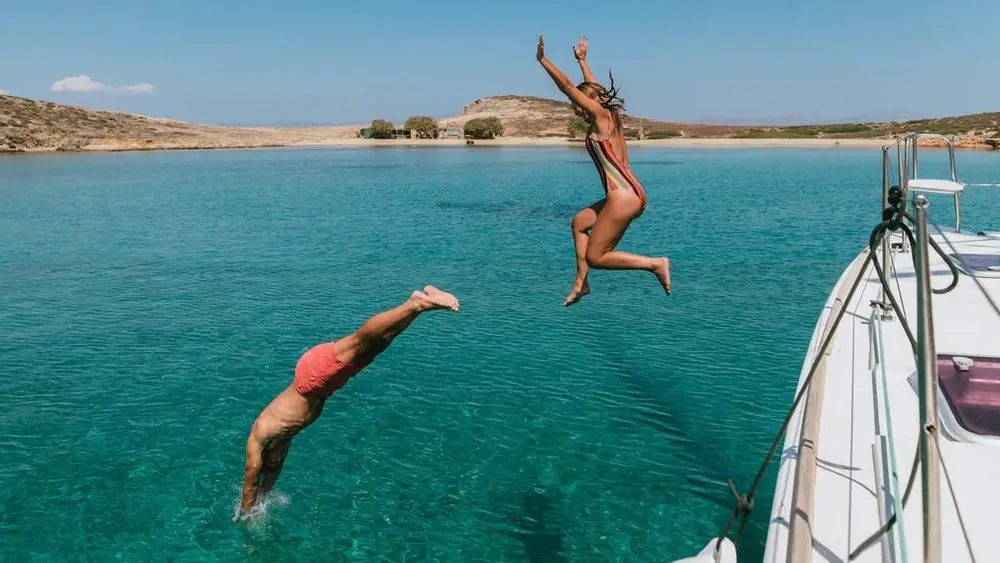
Kleftiko is accessible only by sea, and the water inside the cave complex is shallow enough for snorkelling directly from the yacht's swim platform.
Best time to visit: June to mid-September; avoid during southerly winds. Sailing region: Cyclades
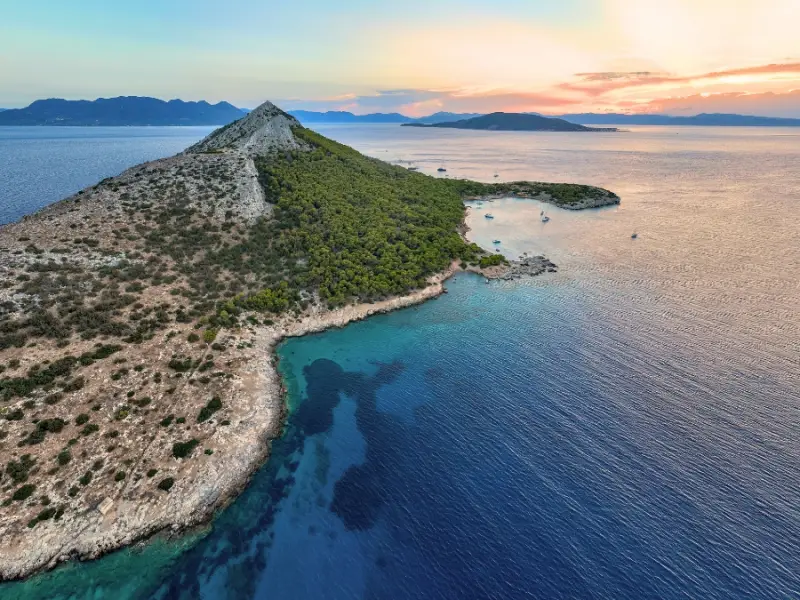
5. Moni Island, Aegina — Athens Explorer Route
A short distance off the southern tip of Aegina, separated from the village of Perdika by a narrow channel, lies one of the Saronic Gulf's most quietly extraordinary places. Moni is an uninhabited islet — no roads, no residents, no infrastructure beyond a small summer beach bar — and it has been a protected wildlife reserve since 1962. What makes it unlike anything else in the Saronic is what lives there: wild deer, kri-kri goats brought over from Crete, peacocks, and squirrels roam the pine-forested interior with complete indifference to the boats anchored offshore.
The water around Moni is among the clearest in the Saronic Gulf, a deep turquoise that shifts to emerald near the rocky shoreline. The main beach on the island's northern tip is where most day visitors congregate, but a yacht gives you access to the smaller coves tucked around the island's perimeter — quieter patches of rocky shoreline where the only company is likely to be a peacock picking its way along the water's edge.
Moni is a highlight of our Greece Athens Explorer route, which sails the Saronic Islands from Athens — taking in Aegina, Hydra, Poros, and beyond across a week of island-hopping aboard a luxury catamaran.
Best time to visit: May, June, or September — the island is day-use only, so an early morning arrival by yacht, before the caiques from Perdika begin running, is the way to have it to yourself.
Sailing region: Saronic Gulf — Athens Explorer route
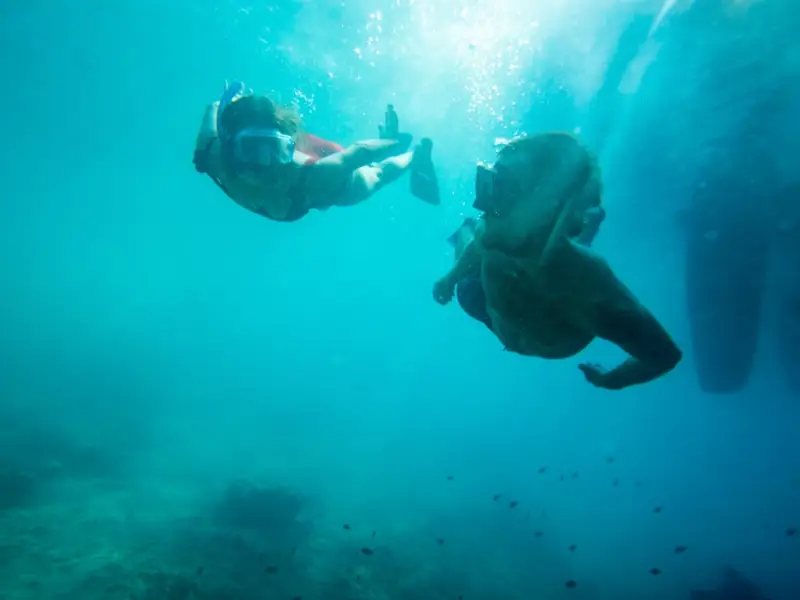
6. Glyka Nera (Sweet Water Beach), Crete — Aegean & South Greece
On Crete's southern coast, between the villages of Loutro and Chora Sfakion, an unusual natural phenomenon creates one of the island's most distinctive anchorages. Freshwater springs rise through the seabed along this stretch of coast, mixing with the salt water and keeping it noticeably cooler than the surrounding Aegean. The Greeks call it Glyka Nera — Sweet Water — and the name has stuck.
The beach is backed by sheer white cliffs, and the combined effect of the cool water, the absence of road access, and the dramatic setting gives the place an atmosphere quite different from anything else on this coastline. There is a hiking path, but it takes over an hour each way and is considered challenging — which means that almost everyone who swims at Glyka Nera arrives by boat, catamaran, or private vessel.
In calm conditions, with the cliffs turning amber in the late afternoon and the spring water cooling the hull, it is one of the most singular places on the Greek coastline.
Best time to visit: June or September; avoid during southerly or westerly swell. Sailing region: Southern Crete
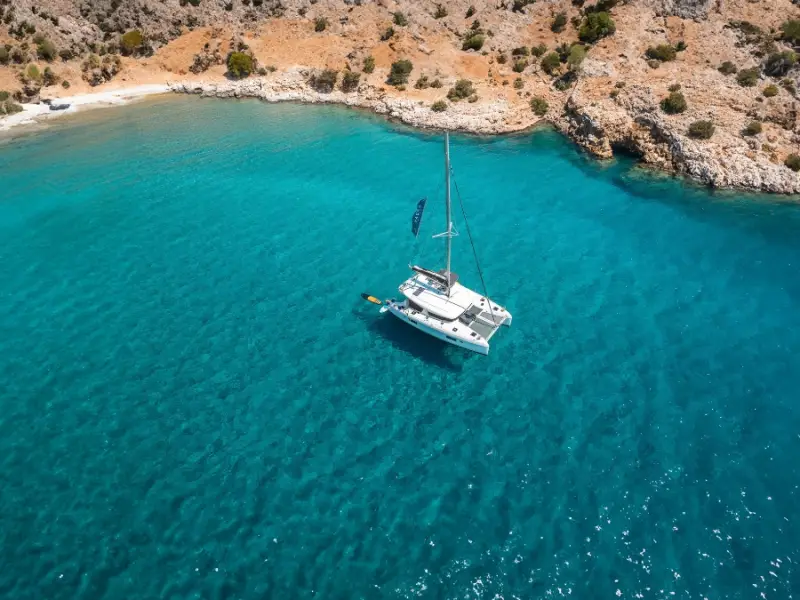
7. Nero Bay, Kato Koufonisi — Paros Explorer Route
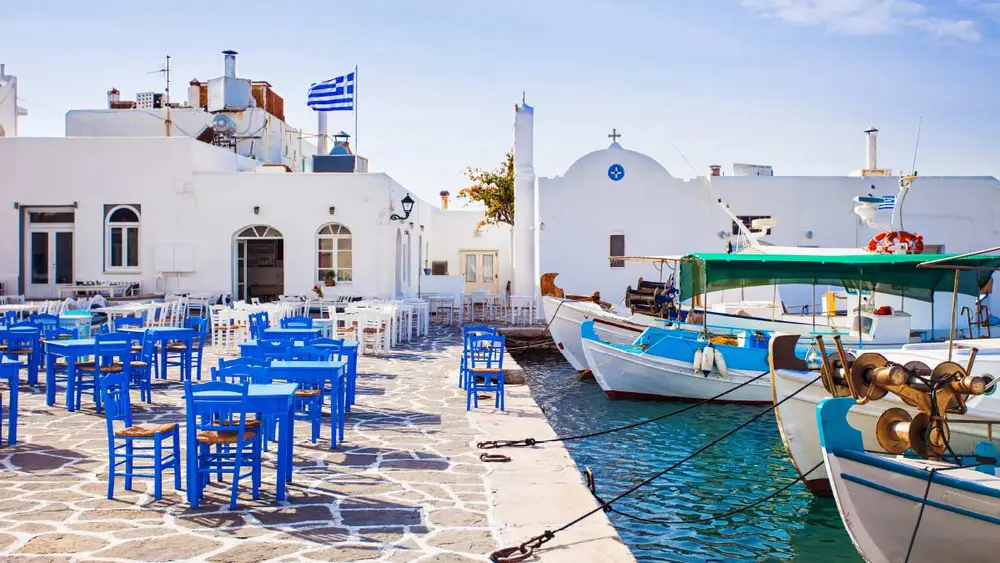
Between Naxos and Amorgos, in the heart of the Small Cyclades, lies a pair of islands that most Mediterranean sailors have yet to find. Pano Koufonisi — the inhabited island — has a small port, a handful of tavernas, and the kind of whitewashed Cycladic calm that increasingly few places can sustain. Its sister island, Kato Koufonisi, sitting just 400 metres across the strait, has none of this. It is entirely uninhabited, without electricity, without a road, and without accommodation of any kind. The only way onto it is by boat.
What distinguishes Kato Koufonisi for a yacht is not any single beach, but the cumulative effect of arriving somewhere with no road access, no crowds, and no infrastructure designed around tourism. The Aegean coast to the south is wave-carved limestone — rock pools, natural arches, and passages that can only be explored from a tender. It is, in the fullest sense, a place kept for those who come by sea.
Our Greece Paros Explorer route takes in the Small Cyclades alongside Koufonisia, Paros, Antiparos, and the wider Cyclades — a week of sailing that consistently surprises guests who arrive expecting the familiar and find something altogether quieter.
Best time to visit: June or September
Sailing region: Cyclades — Paros Explorer route
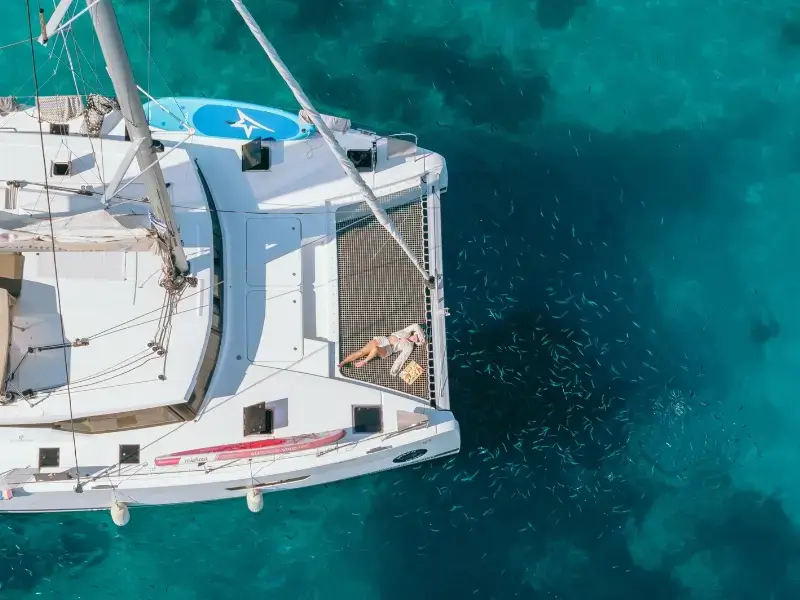
Explore Greece by Catamaran with Yacht Getaways
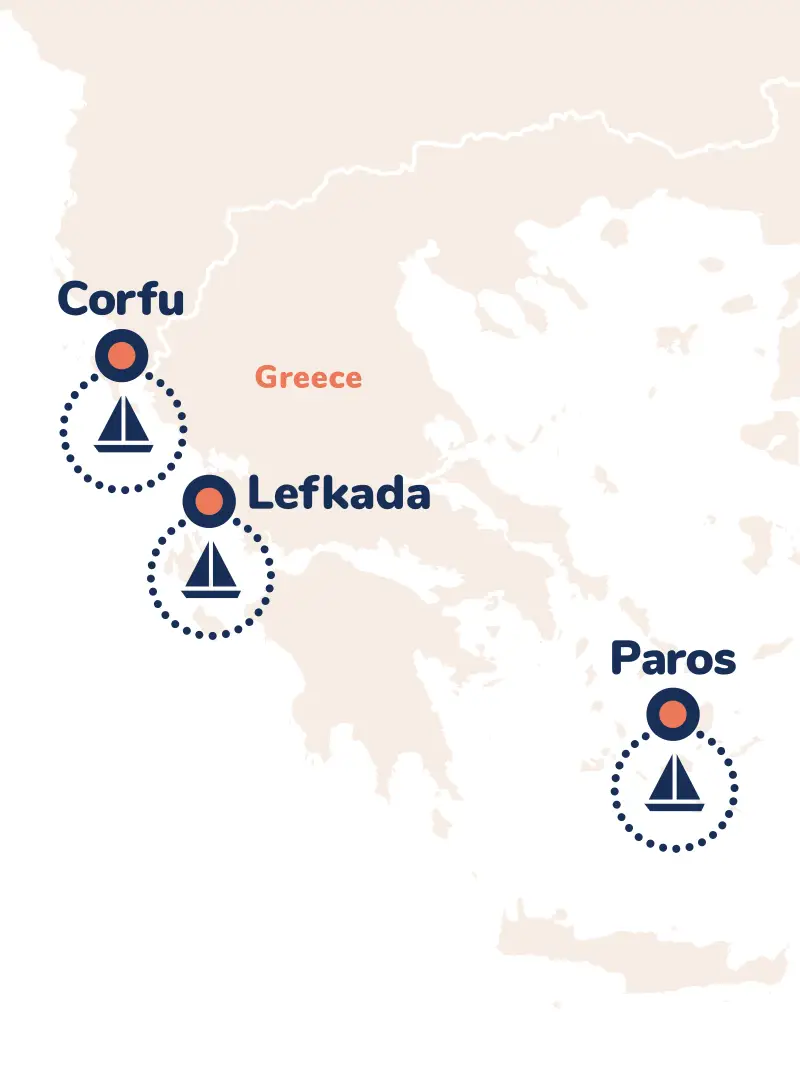
Yacht Getaways is your best way to discover hidden Greece, especially these types of secluded bays. We operate small-group sailing holidays in Greece aboard luxury catamarans, with professional skippers who know these waters and these anchorages well. Routes depart from Corfu, Athens, Lefkada, and the Cyclades, and each itinerary is designed to combine the well-known highlights of Greek sailing with the kind of quiet, unexpected discoveries that the best sailors find for themselves.
See these for yourself, your unforgettable Greek island sailing holiday awaits, book today!
Ryan Brown
Ryan is a corporate escape artist with a severe disdain for the mundane, a hammock addict, adrenaline junky, and experience collector. He uses various mediums to express the beauty of the world to others and to connect people to nature while showing why we should preserve it.
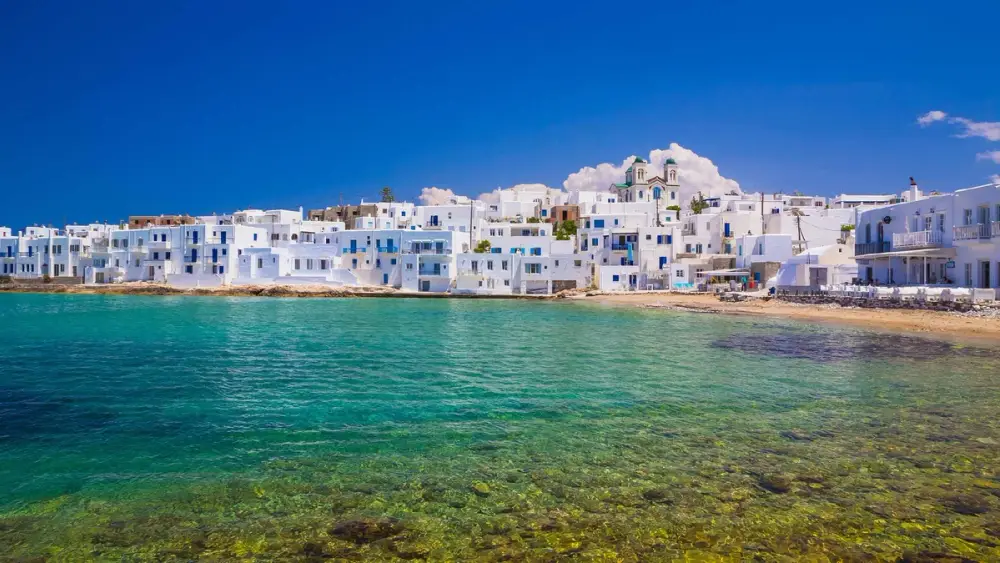
Naoussa
Lefkada
Paros
Ios
Antipaxos
Corfu Old Town
Fiskardo
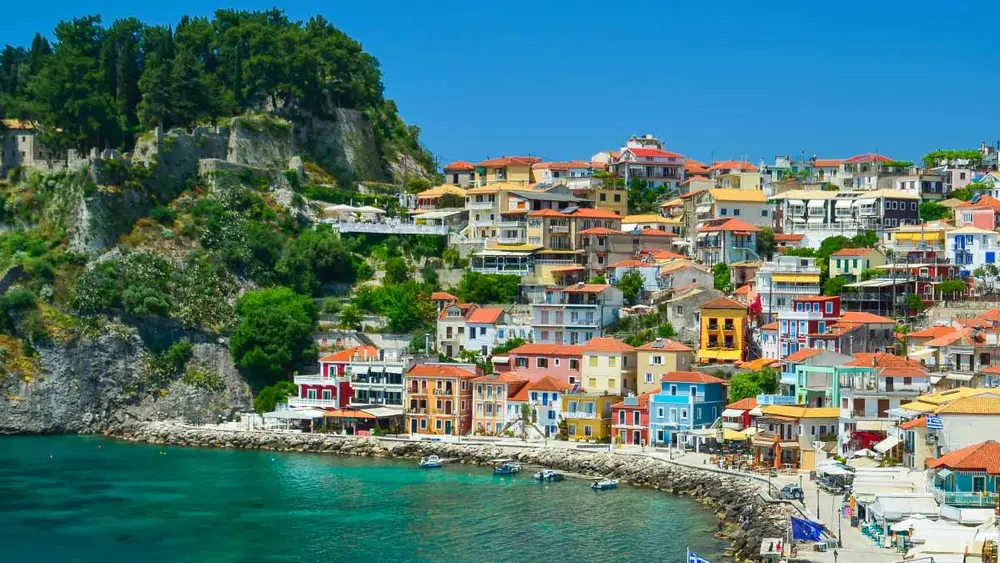
Parga Old Town
Greece
 Departs Paros, Athens, Corfu & Lefkada
 2027 EARLY BIRD SALE!
 From €1,864 Per Person
 Book a Cabin, Share a Yacht
 Whole Yacht Bookings Available
 Sailing May - October
 7 Days, 6 Nights
Explore one of the world’s top sailing destinations. As a mainstay for Greek sailing holidays, the islands of the Cyclades and Ionian seas are a stunning gateway to ancient Greece amid breathtaking islands.